Análise de crédito P2P: como as plataformas protegem o seu investimento (2026)
Peer-to-peer lending platforms connect those looking to borrow with those looking to lend. Between these two parties, though, is the platform itself. The platform’s real function is to filter the loans and protect the capital of its investors if the loans default. While many platforms may promise high yields for investors, stable returns result from a platform’s risk control system, not from the high rates of return that it might offer to attract investors.
Loan Screening
One of the primary systems by which a platform controls risk is through loan screening. Before any project is listed on the platform, the platform conducts due diligence on these borrowers to ensure that the probability of them defaulting on their loans is low.
By filtering out borrowers with poor credit or those that have a weak business or financial structure prior to lending from them, the platform can ensure that the investors’ capital is protected. In modern lending platforms, loan screening involves both qualitative and quantitative analyses of the borrowers to determine whether they are eligible to receive the loans that they require.
Risk Scoring and Predictability of Returns
Another way in which a peer-to-peer lending platform controls risk is by scoring each loan application and determining the likelihood of the borrower repaying the loan. These risk scores allow investors to understand the likelihood of a return on their investments.
| Risk Level | Typical Borrower Profile | Expected Yield | Default Probability | Stability Outlook |
|---|---|---|---|---|
| Low Risk | Established, stable cash flow | 6–9 % | Low | Very Stable |
| Medium Risk | Growing, moderate leverage | 10–13 % | Moderate | Stable |
| Higher Risk | Expansion phase, higher leverage | 14 %+ | Elevated | Volatile |
Collateral and Downside Protection
As with any lending activity, borrowers of peer-to-peer loans may default on their loans to investors. In order to control for this potential loss, many lending platforms require borrowers to pledge assets as collateral for the loans they receive. Should these borrowers default on their loans:
- The assets can be seized to provide returns to the investors
- The platform will follow a sequence of recovery procedures to recover these pledged assets
- Recovered assets will then be distributed to the investors of the defaulted loans
Provision Mechanisms and Cash Flow Stability
To provide further protection for the capital of investors, some platforms have established provision or reserve funds for borrowers that may experience a period of temporary financial difficulty. During this time, the provision fund can lend to the borrower to ensure that:
- The borrower is able to continue to make interest payments to the platform
- The platform can await the resolution of the borrower’s financial difficulties
- Any significant dips in returns to investors are avoided
The management of these provision funds is another signal of the platform’s commitment to protecting the investors’ capital.
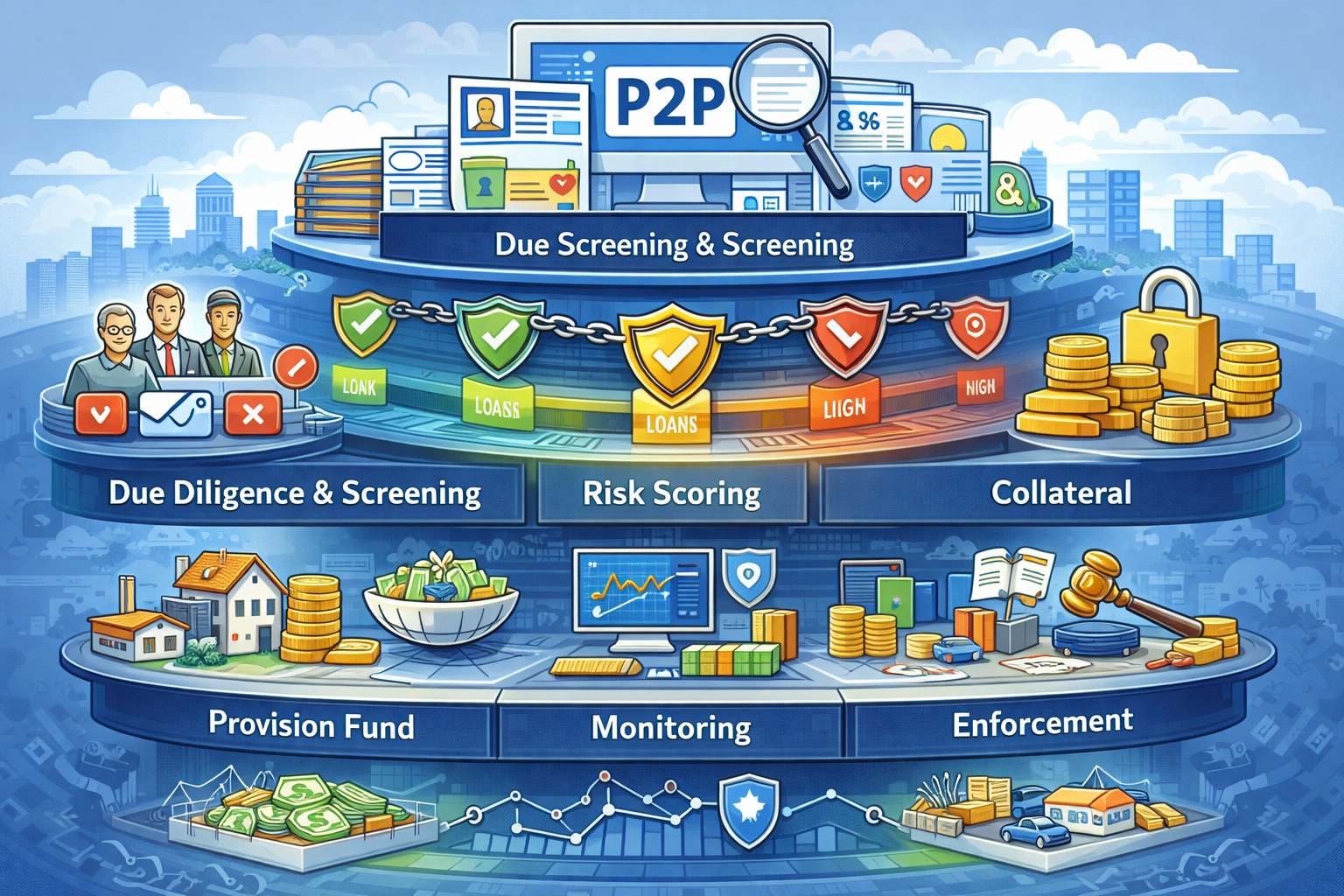
| Protection Layer | Role in Risk Control | Impact on Investors |
|---|---|---|
| Due Diligence & Screening | Filter out borrowers with a high risk of defaulting | Reduces the probability of loan defaulting |
| Risk Scoring | Categories loans into risk levels | Improves the predictability of returns |
| Collateral & Guarantees | Recover the assets of defaulted borrowers | Protects the principal invested |
| Provision Fund | Stabilizes interest payments during temporary difficulties | Ensures smooth cash flow |
| Monitoring & Enforcement | Enforces control over the lifecycle of loans | Limits the downside risks |
Continuous Monitoring and Lifecycle Risk Control
Beyond establishing systems to monitor borrowers prior to lending, most lending platforms will also monitor the loans after they have been released. Any deterioration in the financial health of a borrower can be addressed at this stage by the platform to limit the risk of loss for its investors.
The ability of the platform to monitor the financial health of borrowers and take corrective action will be another signal of the platform’s commitment to controlling risk and protecting the investors’ capital.
Transparency as a Protective Mechanism
One of the signals of a platform’s commitment to investor protection is the platform’s level of transparency. Platforms that publish:
- Statistics of the returns that they pay to investors
- The number of loans that have defaulted
- The various risk metrics of the borrowers
…will allow investors to evaluate the stability of the platform. Platforms that do not make such information publicly available will generally be seen as higher risks by potential investors.
Core Signals of Strong Risk Control
In evaluating a P2P lending platform, investors may focus on a few main signals of risk control:
- Multi-layered loan screening procedures
- Risk scoring systems
- Use of collateral for borrowers
- Existence of provision funds
- Commitment to continuously monitoring borrowers
Structured Risk Control in Practice — The Maclear Model
A few European platforms that operate in a more structured way control the risks for their investors. Maclear operates within a regulated Swiss framework and implements:
- Verification of borrowers before any projects are released to investors
- Collateral requirements for all loans
- Ongoing monitoring of the financial health of borrowers
- Provision funds to make interest payments to borrowers temporarily experiencing financial difficulties
- Collateral reclaim procedures to return funds to investors in cases of long-term difficulties
- Escrow-based fund handling and compliance procedures aligned with investors’ interests
The Maclear model is an example of the structured risk control systems that are in place for peer-to-peer lending platforms today.
Conclusion
Peer-to-peer lending platform risk controls encompass a variety of systems:
- Loan screening reduces the probability of default
- Risk scoring improves the predictability of returns
- Collateral requirements protect investors’ principal
- Provision funds ensure smooth cash flow
- Post-release monitoring limits downside risks for investors
Each of these risk controls ensures that investors’ capital is protected. As such, high yields are not required for investors to generate high returns from their loans. Instead, the implementation of these structures ensures that investors’ capital is protected, and they can enjoy stable returns over time.